ADA vs. IBC Exit Sign Requirements: Understanding Both Codes
ADA covers tactile accessibility for exit signs, while IBC covers life safety requirements including illumination and visibility. Most exit doors require compliance with BOTH codes, often meaning two signs.
Content Verification
Sources:
ADA 2010 Standards for Accessible Design - Section 703
International Building Code 2026 - Section 1013
Side-by-Side Requirements
| Requirement | ADA 2010 | IBC 2026 | Governs |
|---|---|---|---|
| Sign Type | Wall-mounted tactile sign | Overhead illuminated sign | Both Apply |
| Mounting Height | 48"-60" AFF (baseline) | 80" minimum AFF (bottom of sign) | Both Apply |
| Location | Latch side of door | Above or adjacent to door | Both Apply |
| Braille | Required (Grade 2) | Not required | ADA 2010 |
| Illumination | Not required | Required (internal or external) | IBC 2026 |
| Letter Height | 5/8" to 2" (tactile) | 6" minimum (visual) | Both Apply |
Which Code Applies in My State?
The governing code depends on your state's adoption status and local amendments. Generally:
- California: ADA 2010 typically governs as it's usually stricter
- Other states: Check your state's building code adoption and any local amendments
- Federal facilities: IBC 2026 (federal ADA) always applies regardless of location
When ADA 2010 Applies
- All public accommodations
- All commercial facilities
- State and local government buildings
- Any building requiring accessible design
When IBC 2026 Applies
- All buildings with means of egress requirements
- Commercial, industrial, and residential buildings
- Any building requiring fire/life safety compliance
Key Differences
- •ADA requires tactile signs at 48"-60" for touch accessibility
- •IBC requires illuminated signs at 80"+ for visual distance
- •ADA signs need Braille; IBC signs need illumination
- •Most exit doors require BOTH types of signs
- •ADA governs accessibility; IBC governs life safety
For Architects & Specifiers
- Specify BOTH ADA tactile and IBC illuminated exit signs at exit doors
- ADA tactile sign on latch side at 48"-60"
- IBC illuminated sign above door at 80"+ minimum
- Consider combination products that satisfy both requirements
- Some products are designed to meet both codes at once
State-by-State Adoption
California
ADA + CBC + IBC
All three apply, use strictest
Texas
ADA + TAS + IBC
TAS adopts ADA with amendments
Arizona
ADA + IBC
Standard adoption
Nevada
ADA + IBC
Standard adoption
Recent Updates
Products That Meet Both Codes
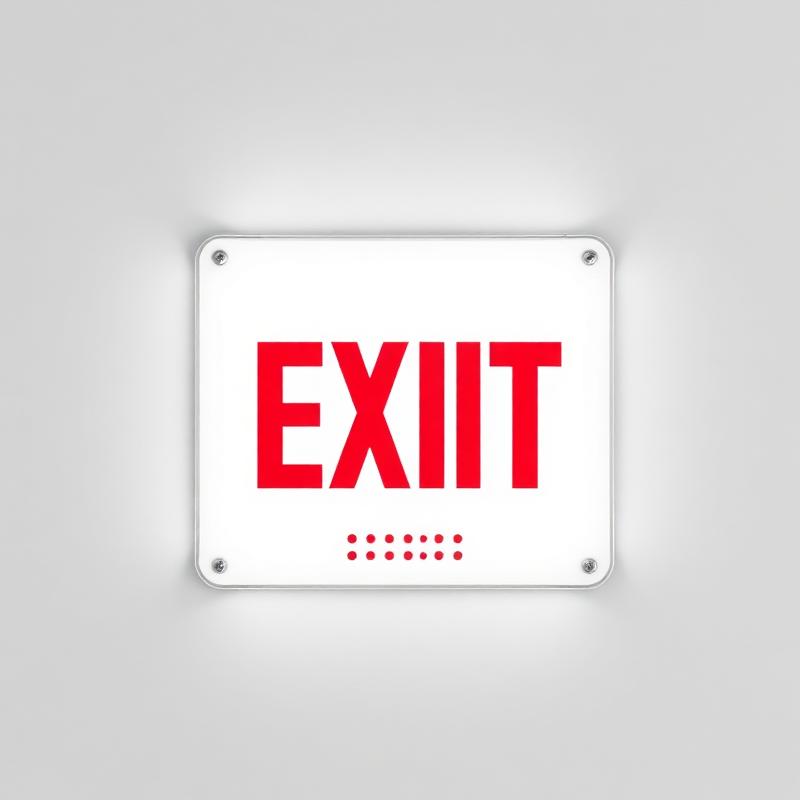

Related Comparisons
Compliance Information Verified
2026-01-30
Multiple Codes
Effective 2026
SpecCodes Compliance Team
Compliance Verification Notice
This information is provided for general reference purposes only. Local inspectors and authorities having jurisdiction (AHJ) have final authority over code interpretation and enforcement.
Before ordering signage, SpecCodes recommends:
- Contacting your local Building Department
- Reviewing current permit requirements for your project
- Confirming any local code amendments that may apply
Legal Notice: This content does not constitute legal advice. SpecCodes provides compliance information as a reference resource only. Users are responsible for verifying all requirements with their local jurisdiction before installation.